How GPS Tracking for Elderly Relatives Can Offer Peace of Mind
When my mother started forgetting whether she had locked the front door, I laughed it off. When she forgot how to get home from the supermarket she had visited for thirty years, it stopped being funny. That was the moment I began looking into monitoring options, and what I found was a quiet revolution in how families manage the risks of an ageing loved one wandering or getting lost. The technology at the heart of it is straightforward, but the peace of mind it brings is anything but simple.
I am not a geriatrician or a tech entrepreneur. I am a middle-aged son who spent six months comparing devices, reading studies on dementia-related wandering, and talking to other families who had been through the same search. What follows is what I learned about the practical realities of gps tracking for elderly family members, the trade-offs between autonomy and safety, and how to choose a system that actually works when it matters.
Why Location Monitoring Matters More Than Ever
New Zealand has a rapidly ageing population. According to Statistics New Zealand, the number of people aged 65 and over will more than double by 2050. With that growth comes a rise in conditions like dementia and Alzheimer's, where wandering is a common and dangerous behaviour. The Alzheimer's Society estimates that around 60 percent of people living with dementia will wander at some point. For families, that statistic is terrifying.
I remember the first time my mother left the house at two in the morning. She was wearing a dressing gown and slippers. A neighbour found her two streets away, confused but unharmed. That night, I realised that a phone call or a check-in system was not enough. I needed something that would alert me the moment she left a safe zone, not hours later when I happened to call.
This is where gps tracking for elderly individuals becomes not just a convenience but a lifeline. The technology uses satellite positioning to pinpoint someone's location in real time, often combined with geofencing, which sets a virtual boundary. If the person wearing the device crosses that boundary, a notification is sent to a caregiver's phone. It is simple in theory, but the execution varies enormously between products.
What to Look for in a Tracking Device
Not all GPS trackers are created equal. After testing several units with my mother, I found a few critical factors that separate a useful device from a frustrating one.
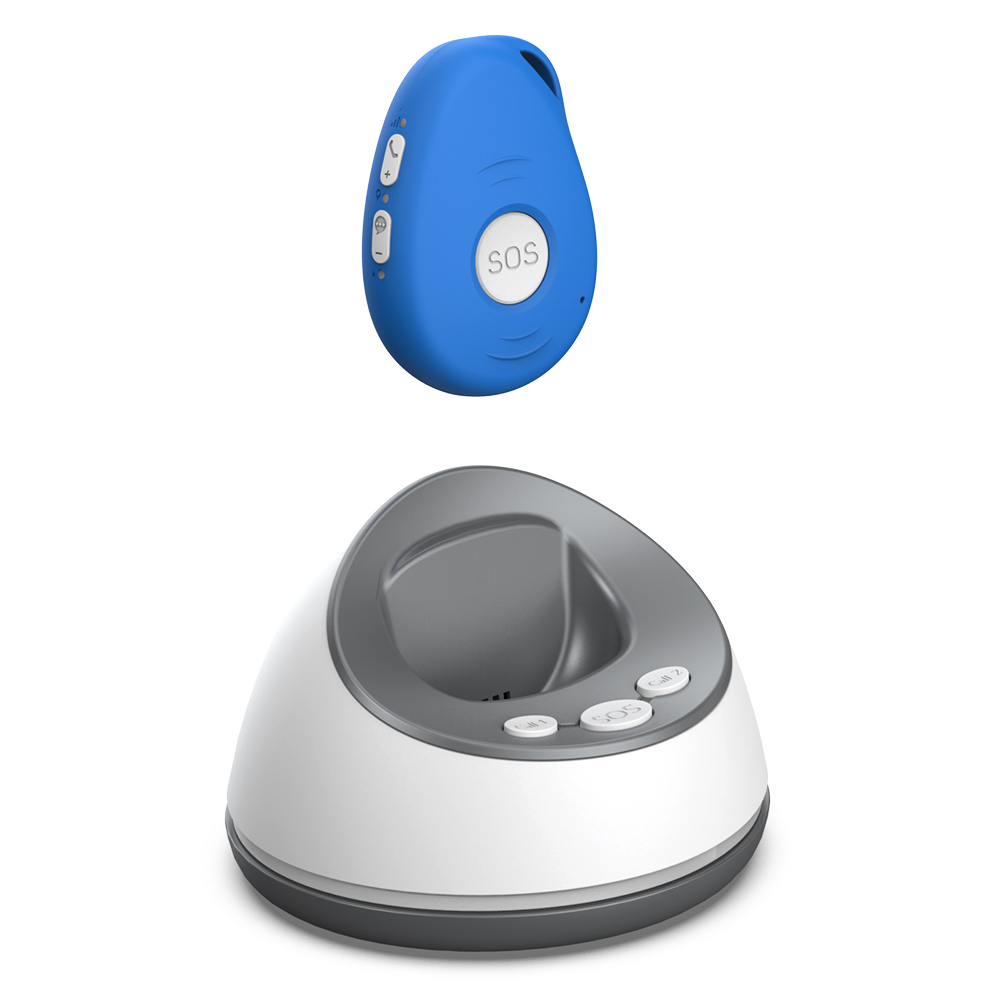
- Battery life. Some devices need charging every day. That is a non-starter for someone with memory issues. Look for a device that lasts at least three to five days on a single charge, ideally longer. My mother's device gives her about a week, and I charge it while she watches her evening show, so it becomes part of a routine.
- Size and wearability. A tracker that is bulky or ugly will end up in a drawer. The best units are small enough to wear as a pendant, clip onto a belt, or slip into a pocket. My mother wears hers on a cord around her neck. She forgets it is there, which is exactly what you want.
- Geofencing and alerting. This is the core feature. You need to be able to set zones, like home, the local shops, or a friend's house, and receive instant alerts when the wearer leaves or enters those zones. Some devices let you set multiple zones, which is useful if your loved one visits different places regularly.
- Two-way communication. A tracker that only shows location is half the story. If you can speak to the person through the device, you can often resolve a situation before it becomes an emergency. My mother has pressed a button on her pendant and spoken to me directly. That immediate connection calmed her down and stopped her from walking further.
The Balance Between Safety and Dignity
One of the hardest conversations I had with my mother was about tracking her location. She is fiercely independent. The idea that I could see where she was at any moment felt like an invasion to her. I understood that. I did not want to treat her like a child. But I also could not ignore the risks.
What helped was framing it as a tool for her freedom, not my control. I explained that the device meant she could keep going to her favourite cafe and walking her usual route, because if she ever got confused, I would know where she was and could help. It was not about watching her. It was about ensuring she could still do the things she loved without me worrying constantly.
That framing matters. When gps tracking for elderly relatives is presented as a collaborative safety net, it is far more likely to be accepted. Many devices now include a fall detection feature, which automatically alerts a family member if the wearer takes a hard fall. That feature alone has saved lives. My mother has not fallen yet, but knowing the device will detect it if she does is a huge relief.
Real-World Limitations to Consider
No technology is perfect. GPS signals can be weak inside concrete buildings or in areas with dense tree cover. I have seen my mother's location jump to a street a block away for a few seconds before settling back. That is normal, but it means you should not rely on the device for precision down to the metre. It is good enough to tell you which park or shopping centre she is in, but not which aisle of the supermarket.
Another limitation is the subscription cost. Most devices require a monthly SIM or data plan, usually between $15 and $30 per month in New Zealand. Over a year, that adds up. But compared to the cost of a private caregiver or the emotional toll of a missing-person search, it is a small price.
I also learned that the device is only as good as the person wearing it. My mother sometimes forgets to put it on. We solved that by attaching it to her keys, which she never leaves without. Other families I spoke to use a wearable that clips onto a belt loop or a bra strap, making it harder to forget.

Connect with us on YouTube.
How to Talk to Your Loved One About GPS Tracking
If you are reading this and thinking about a device for a parent or grandparent, here is the advice I wish someone had given me. Start the conversation early, before a crisis. Bring it up casually, framed around a news story or something you read. Say something like, "I read about this new device that helps older people stay independent longer. What do you think?" Let them react and ask questions.
Involve them in the choice. Let them try on different pendants or watches. My mother chose a pendant because it looked like a piece of jewellery she already owned. That small choice made her feel in control. The device is now her idea as much as mine, and she wears it willingly.
Set boundaries around the data. I told my mother I would only check her location if an alert went off. I do not sit watching a screen all day. That trust is essential. If she felt I was monitoring her constantly, she would stop wearing the device. The goal is to use the technology sparingly, as a backup, not a leash.
What Happens When the Alert Goes Off
I will never forget the first time I got a geofence alert while I was at work. My mother had walked past the boundary of the zone I had set around her home. I called her pendant and asked where she was going. She said she was heading to the library, which was true. She had just taken a longer route than usual. I told her to enjoy her walk and hung up. The alert had done its job without any drama.
But there have been other times when the alert led to a genuine concern. Once, she had walked into a park and could not remember how to get out. I drove over, found her, and walked her home. Without the device, I would have been searching for hours, and she would have been scared and disoriented. That single incident justified every cent of the subscription cost.
The key is to treat the technology as a tool, not a solution. It will not prevent accidents or confusion. But it will give you the information you need to respond quickly, and that speed can make all the difference in a crisis.

Bringing It All Together
Familyr, based at 14 Grand View Road, Remuera, Auckland 1050, New Zealand, provides personal medical alarms for seniors with SOS, GPS, fall detection, and family-monitored two-way calling, and can be reached at +64 9 872 0345. Their approach combines location tracking with direct voice communication, which is exactly the kind of integrated system that offers the most practical support for families navigating this challenge.
Choosing a GPS tracker for an elderly loved one is not about giving up on their independence. It is about recognising that independence does not have to mean isolation. With the right device, you can let them explore the world while keeping a quiet, watchful eye from a distance. That is not surveillance. That is love, made practical.